I believe this poem was written not long after I first left home to go to school.
chiro-gil.deviantart.com
Terree L. Klaes 1997
I believe this poem was written not long after I first left home to go to school.
chiro-gil.deviantart.com
Terree L. Klaes 1997
I read, or heard, or somehow picked up an idea recently. Apparently there is something in the Talmund that says that each person must think from a position that the world was an elaborate gift/creation given only for him or her. At first that seems oddly selfish, but the idea is really anything but selfish. This perspective is meant to create a sense of responsibility for making the world, this special gift, a better place so that each resident here on Earth will always strive to make a difference.
I think that’s a marvelous idea!

People can take this to mean we need to take better care of our natural resources in this world, and so trees are being planted and better sources of energy are being researched and implemented. All of that is great, because I do believe God wants us to take care of what he has given us.
He also gave us another, invaluable resource: each other, and we must learn to take care of one another better. We must stand up for those who cannot stand up for themselves. People are resources and we all have our place in this world. Some have strayed far from their purpose, and still others have had their purpose stolen away from them through the cruelty of those who strayed.
We need to break that cycle and begin a new one. The “pay it forward” idea is not new. If somebody does something for you, receive it as a blessing and find a way to bless the next person. If you see someone oppressed, reach out to give him or her freedom, and in turn that person will help free others.
I hate to see injustice and I feel human trafficking is just about the worst atrocity out there. Although I am not always in a position to take physical action against it, I do my best to spread the word and create awareness so that people who are in a position to take physical action can do so. You don’t have to swoop into brothels and pull out children or work in a safe house where survivors are rehabilitated to be “fighting.” Use your words as weapons and help spread the word on the injustice of human trafficking, and any other injustice out there you know about. When you do that, you are helping. You are giving back. Learn to do what you can, but don’t do nothing.
The May/June issue of Writer’s Digest is dedicated to those who write for children and teens, so I did my ill-coordinated happy dance when it arrived and jumped right in. According to what I read, I’m right on the mark where I need to be, and since Writer’s Digest says I’m doing well, I’m certain others will soon figure this out about me too, and I’ll become a rich indie author.
Ok, but I am where I need to be, I think.
I felt like my book was homeless when I finished it, which is part of why I decided to forgo all the jumping through hoops in search of an agent who would then search for a publisher. I figured my story didn’t really fit anywhere well, so it would have to do as I have always done, and non-conform, see who might pick up on it anyway. But as it turns out, my book does fit as a piece of Middle-Grade literature. Between that and Young Adult fiction, my story Memoirs of an Ordinary Girl: The Middle-ish Ages falls into the middle, Middle-Grade that is. Yet somehow most of the readers I know of have been adults, and not necessarily all even female. I guess I’ve told a timeless, possibly genderless, story. We’ve all gone through the tortures of middle school, right? Also, I don’t often get feedback from that age group because they don’t really do that. I need to enlist the gatekeepers, their parents, teachers, aunts… My book fills the criteria properly, but I still need to reach them.
But even after checking on my word count and the appropriateness of my characters and content, I felt pleased. But what of my soon-to-be-released sequel? My middle schooler protagonist is moving up to high school, my word count is increasing, and some more serious issues will arise, though Drew always tries to keep it light. So, now my series is moving into the Young Adult world. Will that make it hard to categorize my series? It’s moving from one age group to another. I guess I hoped my readers could grow along with Drew, but is it an awkward change? Is my book series going through puberty? Is that even allowed? J.K. Rowling got away with it as everyone read about Harry and his buddies as they grew up. This worked well for her, so here’s hoping (I would cross my fingers, but I already type slowly)
I plan to launch my sequel at the end of May. I’m both excited and want to throw up. I had no idea what I was doing the first time I self published my book, but now I’ve done a little more research and publicity, though all the free kind. Last time, I put the book on Kindle and then started telling people about it here and there. This time I’m planning to shout it from as many rooftops (social media) as possible ahead of time, and to enlist my friends and fans to help.
I’m proud of my sequel. My writing and content have matured and it’s more polished. I also think Drew, my semi-autobiographical protagonist, is a fun, interesting character. In the same Writer’s Digest issue, I also read an article by Jacquelyn Mitchard on “Standout Series Characters” and I think Drew fits this concept:
“One of the most important characteristics of a character who’ll become part of a teen or a kid’s life for several years has a simple, relatable likability.”
Of course, I also read this gem about the fine balance of writing a sequel, a tedious task:
“One of the most difficult things in the word world is to write the second book in a series. The challenge for a good writer is finding the balance– appealing to the reader who’s meeting these characters for the first time and making sure the reader who knows the character already isn’t utterly bored.”
I think I got it right, and soon readers will be able to confirm this for me.
It’s spring, which means here in Florida, it’s pretty much summer from now until October. In honor of the season and because I am fortunate enough to live within a few miles of the ocean, I offer a happy, sunny poem I wrote back in 1996.

dreamsresortsblog.com
Bare Feet
Bare feet in the sand,
with children running hand-in-hand.
Laughs and silly giggles.
Oh, how that foam does tickle!
And the scent of the salt air,
clings softly to sun-bleached hair.
There are castles made of sand;
so proudly they stand,
in the glory of the sun…
the soothing warmth of the sun.
Terree L. Klaes 1996
As mentioned a few “My Words as Weapons” posts back, I am reading Victor Malarek’s The Johns: Sex for Sale and the Men Who Buy It, a troubling read indeed. On pages 27-28 (yep, that’s about as far as my anger has allowed me to read so far) Malarek retells a story of Olenka who was a sex slave at a bar in Bosnia at the age of seventeen. Many of her “clients” were soldiers an UN peacekeepers.
Yes, there is a sick irony that those who were to protect and “keep the peace” were the ones raping Olenka and the other girls at the bar. It’s just another horror of a sex slave’s life. Who do they have to turn to?
They are alone.
They are forgotten.
They are abUSED.
And to most of the men who do it, these women are less than human. Because if they allow the women to be anything more, these johns will know they are the monsters hiding under those girls’ metaphorical beds.
Olenka’s story reminded me of a movie I watched, and knowing it is based on a true story, I can only hope it’s the same story and not just another incident of the same abomination. If you ever feel like getting angry, watch The Whistleblower with Rachel Weisz.
When an author and words love each other, they create a book. But a free book comes from a special place.
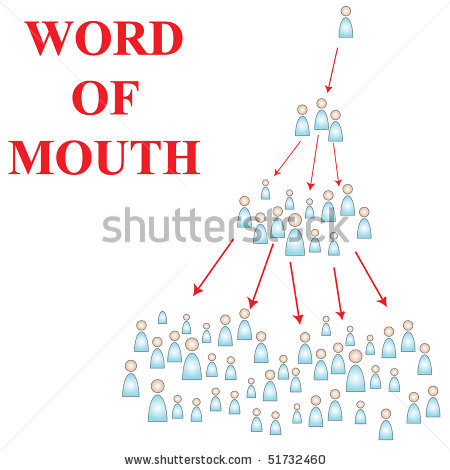
It’s trite, but it’s true. Nothing in life is free. Book giveaways are a way for authors to promote their books and there is an etiquette for it. There is a tacit agreement when you accept a freebie book in a giveaway that you will help out that author. You see, in all honesty, we are hoping that the free book recipients will be appreciative of our giving up our precious work for absolutely nothing by reciprocating in the form of a review or word of mouth advertising. If you receive a free book from us, we get nothing for it unless you help us get the word out about our works. We hope you love it so much you want to tell everyone you know about it, and then they will tell their friends and family about it, who will then tell everyone they know about it… You see the pattern, so that’s enough of that. The point is, word of mouth and reviews can grow and spread exponentially, especially with social media, unless you keep quiet about it, in which case, the possible momentum of a great (or even mildly enjoyable) book dies with you.
Consider this: A few months back, my husband and I and a friend of ours were out shopping and beginning to consider a place to grab some dinner. We just happened to walk past a restaurant that was doing a practice, pre-opening night and they invited us in for a free meal. The food was amazing and experience and atmosphere was impressive, so we told everyone by posting on Instagram, Twitter, and Facebook. By the restaurant (MShack at St. John’s Town Center in Jacksonville, FL) hosting this free dinner night they got free advertising and were able to practice making and serving the food, as well as get feedback from us and the other lucky free dinner recipients that evening. Written reviews of free books do the same thing as they not only spread the word and inform those searching for a good book that this is one to take a chance on, but the author also gets to read some feedback.
Tell your friends, neighbors, coworkers, the girl ringing up your groceries. Write a review on Amazon, Goodreads, your blog, or basically any social media outlet you choose.
Do you know many authors? The majority of us are not rich off our royalties. In fact, the number of authors able to live off the income from their books alone is minute, as one grain of sand on the beach or a single screaming girl at a One Direction concert.
We can write our hearts out and produce a masterpiece, but unless someone voices to another how extraordinary the book is, nobody else will ever know and it will die in obscurity.
So help a brother or sister out! Read it. Review it. Let the author know how you feel.
If you’re interested in helping this starving artist click here.
I’m stretching out of my usual content (whatever the heck that really is) in order to post a book review. I’m not planning to make a complete habit out of this, but I figured I could throw one in once in a while. After all, I’m an author and I ought to help out my fellow authors, right?

John Reinhard Dizon’s Hezbollah (The Party) manages to mix nostalgia, music, the mafia, boxing, and Middle Eastern tensions into one story about relationships and what causes people to move on.
The plot moves forward through the prism of different points of view from members of the band Hezbollah, each sharing their own fractures while working to pull the entire story together through flashbacks and the progression of the present time as they are all faced with the possibility of a reunion show in Megiddo. The problem is they are all torn as to whether or not they can pull it together again for one more show, especially one that forces them to relive the trauma and loss they experienced the last time, and having to accept that they aren’t all kids anymore.
I love stories with good characters and strong friendships, and this has both. Though years have passed and not all members of Hezbollah have kept in touch, they all share a connection deeper than they even understand, yet it’s not all rainbows. There’s an underlying darkness that has inserted itself in their relationships, though they hold one another up in times of need. The reader is able to learn what has happened to each character and what may have driven them to where they end up.
Another quality to appreciate in this book is the author’s knowledge of the music scene, giving it an authentic feel while reading. I recommend this book to music lovers or anyone who appreciates a good, reflective look back on life.
Memoirs of an Ordinary Girl: The Middle-ish Ages takes place from 1988-1991, and since music is so important to Drew, my protagonist, I’ve pieced together a soundtrack based off mentions in the book, as well as my personal memories of the time period, for better, or sometimes, worse. Seriously, a few of these songs are awful, but they’re true to the time period. I wanted to make a public playlist in iTunes, but apparently that is no longer an option, so you can enjoy my inclusion of videos instead. Now you get a taste of the fashion too. Let’s hope most of it does not cycle back around.
A great big thanks to Youtube, our modern day MTV.
Skid Row’s: Youth Gone Wild
My favorite band around eighth grade. I was in love with Sebastian Bach and jealous of his hair.
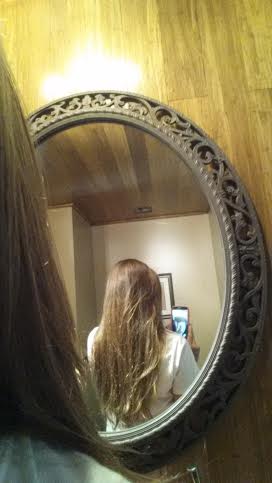
My hair now. I swear it’s just a coincidence.
Bon Jovi: Bad Medicine
Speaking of hair, anyone remember when Jon had all that hair?
Marcia Griffiths: Electric Boogie
Flashbacks to gym class and school dances. Nooo!
Poison: Nothing but a Good Time
The epitome of glam rock.
Milli Vanilli: Blame it on the Rain
Or maybe blame it on the lip synching.
Faith No More: Epic
The fish at the end of the video caused quite an uproar, but we were assured no paraphyletics were harmed in the filming of this video.
Warrant: Heaven
A humorous note here: their semi-coordinated stage outfits remind me a bit of stormtroopers. A sad note: I believe the front-man, Janie Lane, died a few years ago.
Guns N Roses: Welcome to the Jungle
The first time I heard this song one of the skater kids in my class (probably 6th grade?) brought it in and talked the teacher into letting him play it for us. I had no access to music like that back then, but I wanted it!
Bad English: When I See You Smile
This song was out not long before I moved and somehow it became the song my best friend and I used to remember each other (my Bridgette, Drew’s Belle)
New Kids on the Block: Step by Step
What I hated most from pop-culture of this time period was those stupid NKOTB t-shirts with the florescent handprints, and I believe their signatures. They were everywhere! I forgot this song existed until a grown man played it recently in my presence. Weird. And all these years later… I still find it just as cheesy.
Poison: Every Rose has its Thorn
Still a sing-along song for me if it comes on the radio while I’m in the car.
Billy Joel: We Didn’t Start the Fire
I didn’t appreciate this song at the time, but I did like the video (even though I wasn’t supposed to be watching any videos)
M.C. Hammer: U Can’t Touch This
I think these pants are trying to come back in style. Please don’t let it happen.
Vanilla Ice: Ice Ice Baby
Turns out I have the same birthday as Robert Van Winkle, which many young girls were jealous of at the time. Personally, I was insulted. He moved on to flipping big houses in Florida. Who knew?
Thanks for going old school with me for a bit. Share it if you like it.
We’re seeing more of a focus these days on “Fair Trade” items, which is great because it shows the awareness for modern slavery and gives consumers a chance to make a conscious decision to buy items they know were not produced through slavery or sweatshop conditions. Certainly, slavery in any form is a terrible injustice and must be stopped.
Now, I’m not sure why this is a debate, but in my reading and web surfing I have found that some people are actually angry that, in some cases, the flesh trade, or sex trafficking, often gets more attention than slavery which forces manual labor. First of all, I don’t know that this is true. I think more people know about the evils of sweatshops and the like than actually realize that people’s bodies are being sold for sex, not by their own choices. But even with that aside, I personally feel there are more layers of terror to sex trafficking; it peels away the soul, one john at a time. There is even more of a loss of self-worth and dignity in the chasm that is the flesh trade. There’s a vulnerability in sex, and these are people who are forced to do it several times a day and night, for little to no money at all. And for many, it starts when they are still children, sought out to be tricked and kidnapped into this vile life. Innocence is lost.
But why would people fighting for human rights even worry about getting caught up in which type of slavery is worse? Owning human beings is wrong, no matter what they are used for. It all needs to stop. There is a 1:9 ratio of the sex trafficked to those forced into manual labor, so I suppose it seems the percentage of those caught in the flesh trade is small in the grand scheme of human trafficking, but it is all wrong. Here’s a link to an interesting fact sheet from the Polaris Project to help put it into perspective.
Don’t just fight for one type of slave versus the other. Fight for all the estimated 27 million people who have been robbed of their freedom.
sengkangbabies.com
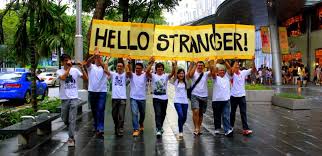
I have a social challenge for you. This week, at least one time, ask a stranger a question about him or herself. I don’t care what the question is, as long as it’s not offensive or stalker-like. Also, I don’t care where you do it: while walking your dog, at your local coffee shop, at Walmart…wait. Heavens no! Don’t go to Walmart, especially not for this mission. Oh, and you probably don’t want to do this in a public bathroom either. But at the supermarket, a restaurant, a bookstore, a florist’s shop, that sort of place. And don’t be too selective either. Be safe, but not picky. Maybe you don’t normally talk to anyone over the age of fifty. Unless he’s eating paint chips or talking to himself or paint chips, give it a try. You just need opportunity. Maybe a question like, “Wow, where’d you get that awesome hat?”
Why am I issuing such a challenge? You already know yourself, but you may never get another chance to know this person’s story. It could be interesting, life-changing even, or just make her or him feel special for a moment during a bad day. There are 7 billion people in this world. How many do you know?
 caverns of my mind